The Human At The Edges
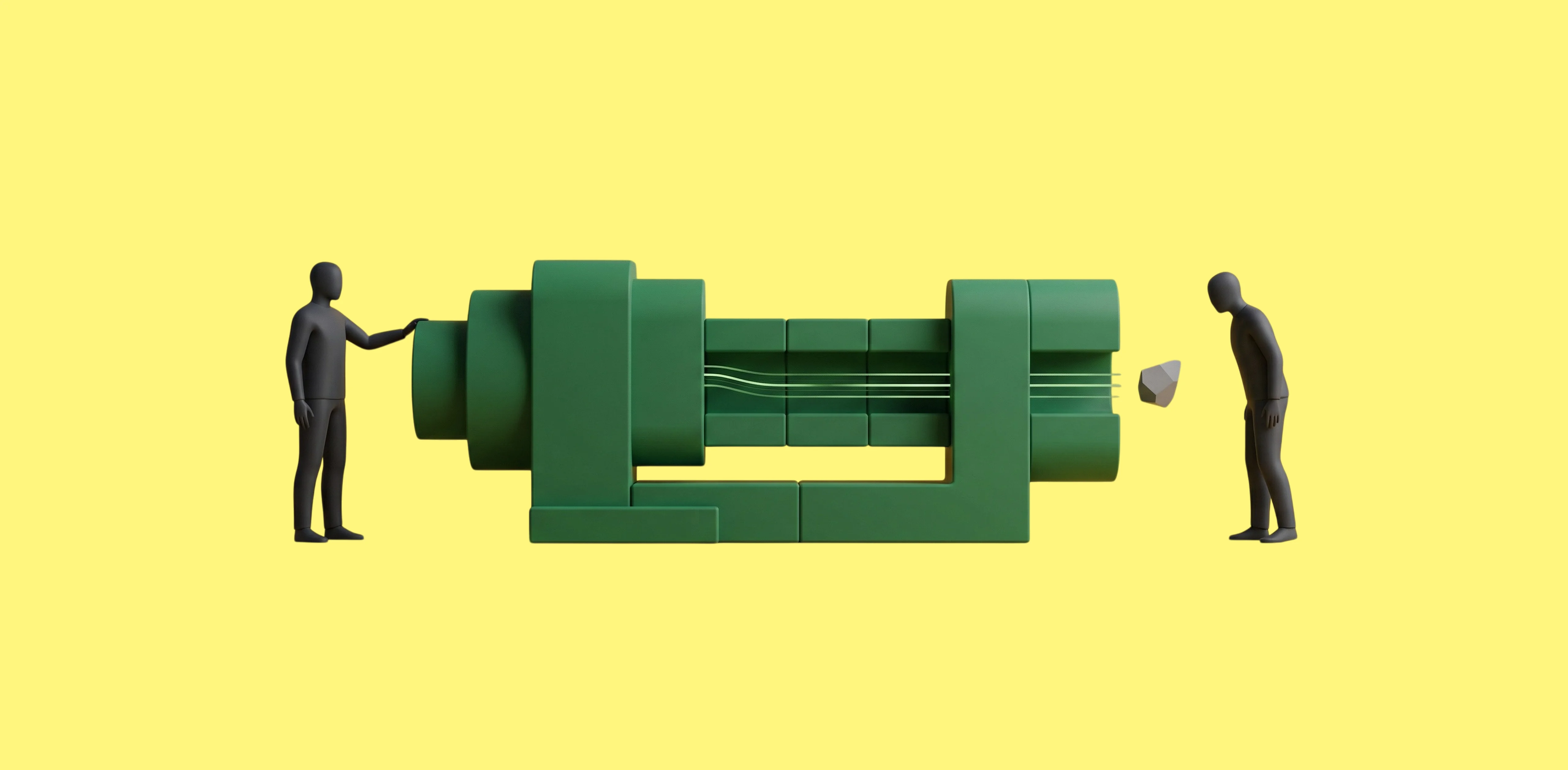
Not everywhere. Not nowhere. At the edges. Mike Molinet & Govind Kavaturi explain where humans belong in AI workflows: intent, verification, and exceptions. The middle is the machine. The edges are you.
Mike Molinet & Govind Kavaturi
Last week we talked about selling outcomes, not motors. The vacuum cleaner lesson. Stop screaming "AI-powered" and start showing what it does.
This week: a question every builder is facing right now.
Where should humans still be involved?
The Leak
Claude Code's source code got leaked this week.
Not because AI made an error. Because a human did.
Boris Cherny, from Anthropic, posted it plainly: "It was human error. Our deploy process has a few manual steps, and we didn't do one of the steps correctly."
The irony? 100% of his contributions to Claude Code in the last 30 days were written by Claude Code itself.
The AI wrote the code perfectly. The human forgot a step.
1.3 million people saw that post. It's the perfect encapsulation of where we are right now.
AI is getting better every week. Human error isn't going away.
So where does the human belong?
The Wrong Answer: Humans Everywhere
The old model: humans do everything, AI assists.
Review every output. Approve every action. Check every line. Edit every draft.
That's over.
If you're still manually reviewing everything AI produces, you're the bottleneck. You're slowing down the system you built to go fast.
One of us had this problem last month. Agents running, outputs generating, but nothing shipping because every piece needed human approval. The queue backed up. The leverage disappeared.
Humans everywhere means no leverage.
You didn't build an AI system. You built a more complicated way to do the same work.
The Other Wrong Answer: Humans Nowhere
Full automation. AI does everything. Remove all the manual steps. Ship it.
That's how you get:
- Hallucinations in production that nobody catches.
- Security leaks like Claude Code.
- Silent failures that look fine until they're not.
- Trust erosion with users who got burned once and won't come back.
Vol 8 was about this. Agents don't give second chances. Humans complain. Agents just leave.
Humans nowhere means no safety net.
You built something fast that breaks in ways you don't see until it's too late.
The Right Answer: Humans At The Edges
Not in the middle of every workflow. At the edges.
Three edges.
Edge 1: The Beginning.
Intent. Direction. What are we building and why?
AI can't decide what's worth building. AI can't decide what matters to your users. AI can't set the strategy.
That's human work. Before anything runs, a human decides what should run.
Edge 2: The End.
Verification. Did it actually work? Is the output correct? Is it safe to ship?
AI can execute all day. But someone needs to confirm the outcome matches the intent.
Not checking every line. Checking the result.
Edge 3: The Exceptions.
When something breaks. When something's ambiguous. When stakes are high.
AI handles the 95%. Humans handle the 5% that matters most.
The customer who's about to churn. The edge case that doesn't fit the pattern. The decision that could go either way.
That's where human judgment earns its keep.
The Framework
Here's how to think about any workflow:
- Intent and direction: Human. AI can't decide what matters.
- Execution: AI. Faster, cheaper, tireless, no ego.
- Verification: Human. Trust requires human judgment.
- Exceptions: Human. Stakes too high for automation.
The middle is AI. The edges are human.
If you're putting humans in the middle, you're wasting their time on work AI should do.
If you're removing humans from the edges, you're building a system that will fail in ways you won't catch.
The Counter-Intuitive Fix
Here's what Boris said about fixing the Claude Code leak:
'"Like with any other incident
Read that again.
The human error happened in a manual step. A step that required someone to remember something. A step that was boring and repetitive and easy to forget.
The fix? Automate that step too.
But notice what stayed human:
- The decision to investigate.
- The judgment about what went wrong.
- The direction for how to fix it.
- The communication to users about what happened.
AI will execute the fix. Human decided what to fix.
That's the pattern.
Where Are Humans In Your Workflow?
Ask yourself right now:
If humans are everywhere: you're not leveraging AI. Find the middle steps. The repetitive ones. The ones that don't require judgment. Automate them.
If humans are nowhere: you're building a time bomb. Add humans at verification. Add humans at exceptions. Someone needs to confirm outcomes and catch edge cases.
If humans are at the edges: you're doing it right. Now optimize those edges. Make intent-setting faster. Make verification easier. Make exception-handling smoother.
The Builder's Edge
This is actually a competitive advantage.
Most builders are doing one of the two wrong things.
Either they're terrified of AI and keeping humans in every step. Slow. Expensive. No leverage.
Or they're over-confident and removing humans entirely. Fast until it breaks. Then trust is gone.
The builders who get the edges right will ship faster AND maintain trust.
Speed without recklessness. Automation without abdication.
That's the balance.
The Connection
Vol 8: Trust is the moat. Humans at verification create trust.
Vol 9: Sell the outcome. Humans at intent define the outcome.
Vol 10: Humans at the edges. Intent. Verification. Exceptions.
The AI does the work. The human makes sure it's the right work.
Vol 1: The opportunity exists. Economics changed.
Vol 2: Smart operators doing dumb work. Patterns to spot.
Vol 3: Stop automating. Start eliminating.
Vol 4: The game changed. Train like it matters.
Vol 5: Agents will run daily life. Build the access.
Vol 6: $100M solo founder. The grind behind the highlight reel.
Vol 7: The launch economy. 1 million launches. 10,000 winners.
Vol 8: Trust is the new moat. Build it in from day one.
Vol 9: Stop selling AI. Sell the outcome, not the motor.
Vol 10: The human at the edges. Intent. Verification. Exceptions.
AI can do almost anything now.
The question isn't "can AI do this?"
'The question is "should a human be here?"'
The answer: at the beginning, at the end, and when it matters most.
The middle is the machine.
The edges are you.
Where are your humans right now?
Mike & Govind
Building with AI? Map your workflow. Find where humans are stuck in the middle. Move them to the edges. That's where they belong.