The Launch Economy
1 million products will launch. 10,000 will hit $1M. The filter is distribution.
Mike Molinet & Govind Kavaturi
Last week we talked about the $100M solo founder. The grind behind the highlight reel. The proof that one person can build something massive.
This week: what happens when everyone realizes they can do the same thing.
The Launch Flood
Big product launches used to happen once a year. Apple events. Google I/O. Product Hunt launch day.
Now they happen once a week. Sometimes once a day.
Model upgrades used to be events you planned around. GPT-4 dropped and everyone stopped what they were doing. Now? New models ship weekly. Gemini, Claude, Llama, Mistral. It’s background noise.
Building used to take months. Now you can one-shot a beautiful app in a day. Lovable. Bolt. Cursor. The UI looks professional. The backend works. Ship it.
The barrier to launch dropped to zero.
Which means the next 24 months will see more product launches than the last decade combined. 1 million launches. Maybe more.
Most will fail. That’s not the point.
The point is: 10,000 of those will hit $1M ARR. And the filter that separates the 10,000 from the 990,000 isn’t building anymore.
It’s distribution.
Why This Is Happening Now
Three things collapsed at once.
Build time collapsed.
Anton Osika built the first version of Lovable in a weekend. A single weekend. That company is now worth $6.6 billion.
One of Lovable’s users went from idea on a Sunday night to first paying customer four days later. Built the Stripe integration while drinking coffee over breakfast. Pushed his chair back and thought: “Okay, this is insane.”
Team size collapsed.
Midjourney hit $200M ARR with 11 employees. Zero marketing spend.
Cursor hit $100M ARR with 12 people. Fastest SaaS company to that milestone in history.
Lovable hit $100M ARR with 45 people. That’s $2.2 million in revenue per employee. Industry benchmark is $200,000.
Time to revenue collapsed.
Cursor: $100M ARR in 12 months.
Lovable: $10M ARR in 60 days. $100M in 8 months.
Bolt: $20M ARR in 2 months.
Stripe’s 2025 data: twice as many startups hit $10M ARR in three months compared to 2024. And 20% charged their first customer within 30 days. Up from 8% in 2020.
These aren’t outliers. They’re the new baseline.
And here’s what connects them: none of them won on building. Everyone can build now.
Midjourney spent zero on marketing. Cursor grew through word of mouth. Lovable’s product was so good people couldn’t stop sharing it.
They won on distribution. That’s the filter now.
Now Imagine What One Person Can Do
These are teams. Small teams, but still teams.
Cursor has 12 people. Lovable has 45. Midjourney has 40.
They’re hitting $100M, $200M, $500M ARR.
Now do the math backwards.
If 12 people can build a $100M business, what can one person build?
We already know the answer.
Pieter Levels runs Nomad List, Remote OK, and Photo AI. Solo. $3M+ ARR across his portfolio. No employees. No office. Works from his laptop anywhere in the world.
Marc Lou shipped 20+ products. Multiple hitting $1M+. Solo founder. Documents everything publicly. Proves the playbook works.
AJ built Carrd. One-page website builder. $1M+ ARR. One person.
Jon Yongfook built Bannerbear. Started with $500. Hit $1M ARR. Solo.
These aren’t hypotheticals. These are solo founders already hitting $1M+ with the same tools available to you right now.
And they did it before Cursor. Before Lovable. Before Bolt. Before the current wave of AI tools.
The ceiling collapsed for teams. The floor rose for solo founders.
That’s where the 10,000 come from.
Channel-First Has Replaced Product-First
The old playbook: Build something great. Then figure out how to sell it.
That playbook is dead.
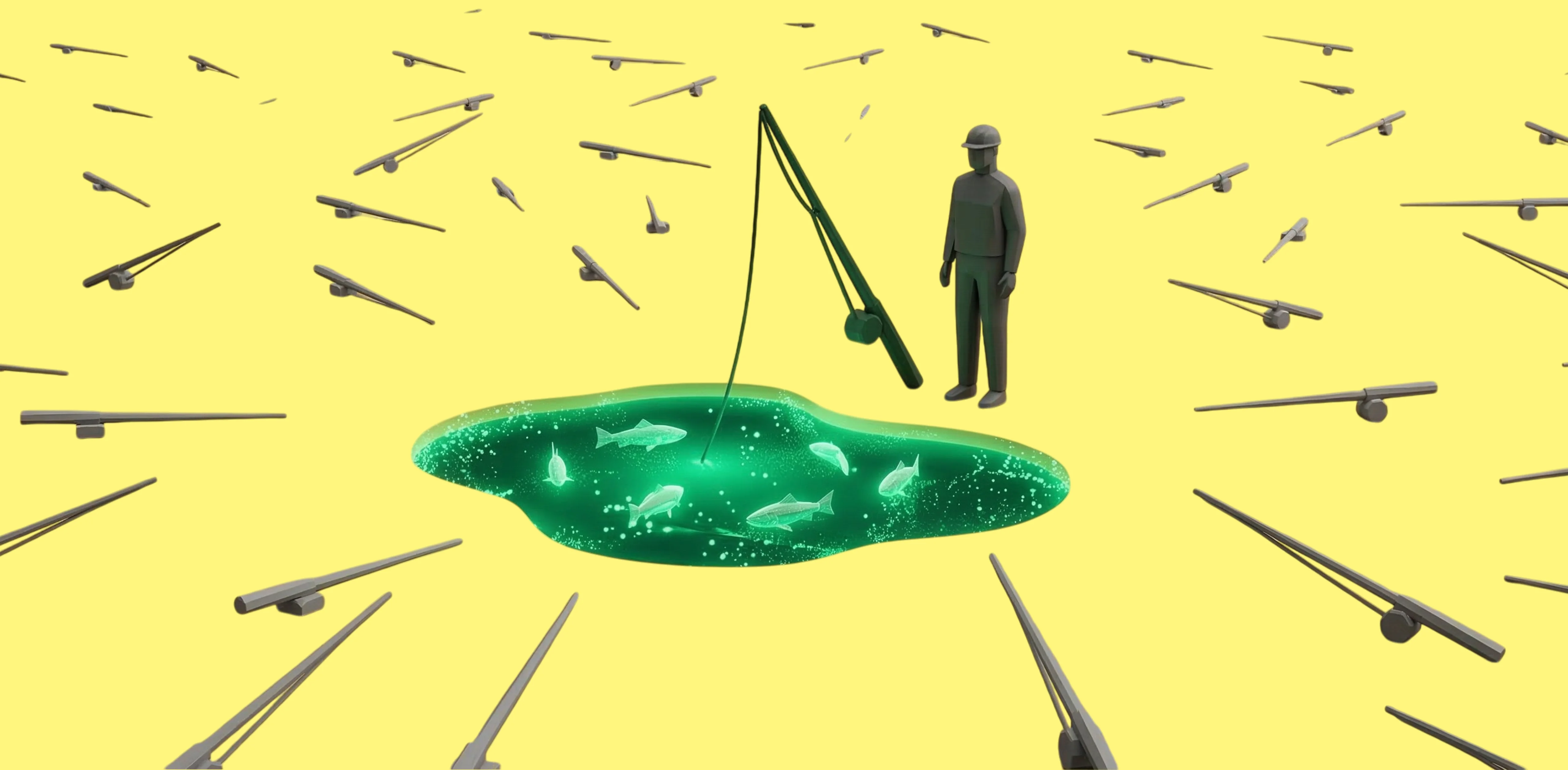
The builders winning now are doing it backwards. They’re finding where audiences already exist with a problem. Then building the solution for that specific lake.
We talked to Steven and Cesare, two founders who left 8+ year management careers at a VC-backed company. Sold to an Australian competitor, stayed on, then quit.
Steven described the VC path: “It felt like a jail. Raise money, steer toward the next round, repeat.”
They chose bootstrap. 100% for freedom. Making less money now. Don’t care.
They built a product called Job Alert over a year ago. Forgot about it. Rediscovered it when the domain renewal email arrived. Then decided to actually distribute it.
Hit $2.5K revenue. Around $1K MRR. In under two months.
The channel? Reddit.
But it took getting banned 10 times before it worked. The secret: don’t pitch first. Bring value. The subreddit is a closed community. Get in before you sell.
“Find the lake, then build the rod. We used to walk around with a hook looking for water. Now we find where the fish are, then decide what to build.”
Wrong order: Build product → Find audience → Hope for traction
Right order: Find audience → Understand problem → Build solution → Launch to people already waiting
Validation Has One Answer Now
Forget signups. Forget waitlists. Forget user interviews.
Cesare spent 20 years in product. Here’s what he learned:
“There’s nothing that validates more than a payment. 20 years of experience. Waitlists, questionnaires, interviews. Waste of time. Only a person making a payment to a page created yesterday.”
A Stripe notification is validation. Everything else is noise.
The old validation process took months. Talk to users. Build MVPs. Run beta programs. Iterate. Launch. Then hope people pay.
The new validation process takes days. Build it. Put a price on it. See if anyone pays.
The speed of building now matches the speed of validation. You can test the entire loop in a week.
But here’s what didn’t change.
The Launch Effort Doesn’t Compress
Building gets faster. The mental energy each launch costs doesn’t.
Every launch takes something out of you. The anticipation. The fear of failure. The public exposure. The emotional investment.
AI didn’t compress that. You can build in two days, but the psychological weight of putting something into the world stays the same.
This creates a filter.
You can’t launch everything. You can’t test every idea. The mental cost is real.
So you have to choose wisely. Only go where the market is already proven. Only build for lakes that already have fish.
Steven puts it simply: “You hear the same problem 5 times, 10 times, 22 times in a week. That’s when it starts moving in your head.”
When you hear the same problem over and over, the market is telling you something. That’s where you spend your launch energy.
The Signals
How do you know you found a lake?
“You hear the same problem 5 times, 10 times, 22 times in a week. That’s when it starts moving in your head.”
Listen for:
Competition that’s making money. The old thinking was: if it’s already built, don’t build it. The new thinking: if it’s NOT online, ask yourself why. Probably doesn’t exist for a reason. Competition is validation. Cursor didn’t invent AI coding. Lovable didn’t invent no-code. They found proven lakes and executed better.
People duct-taping solutions. Spreadsheets. Zapier chains. Manual workarounds. If people are hacking together a solution, they’ll pay for a real one.
The same question asked repeatedly. Reddit threads. X/Twitter complaints. Slack communities. If the same pain keeps surfacing with no good answer, that’s a lake.
Mediocre products with paying customers. If someone is making money with a bad product, imagine what a good one could do.
Find the lake. Then build the rod.
The 10,000 $1M Businesses
1 million products will launch in the next 24 months.
Most will fail. No distribution. No audience. No lake.
But 10,000 will hit $1M ARR.
The math works now.
$1M ARR is 84 customers paying $1,000/year. Or 834 paying $100/year. Or 8,340 paying $10/year.
These aren’t crazy numbers. These are achievable numbers for a solo founder who finds the right lake before they build the rod.
The tools exist. The channels exist. The playbooks exist.
Pieter Levels proved it. Marc Lou proved it. The Lovable user who went from idea to paying customer in four days proved it.
The only question: will you be one of the 10,000 or one of the 990,000?
The difference isn’t talent. It’s not the product.
It’s finding the lake first.
Vol 1: The opportunity exists. Economics changed.
Vol 2: Smart operators doing dumb work. Patterns to spot.
Vol 3: Stop automating. Start eliminating.
Vol 4: The game changed. Train like it matters.
Vol 5: Agents will run daily life. Build the access.
Vol 6: $100M solo founder. The grind behind the highlight reel.
Vol 7: The launch economy. 1 million launches. 10,000 winners.
Vol 6 proved one person can hit $100M.
Vol 7 is about the 10,000 who hit $1M.
The lake is out there. The rod is cheap to build.
Which one will you be?
Mike & Govind
Know a builder about to launch? Forward this to them. Find the lake first.
Shoutout to Steven and Cesare for joining us and sharing their experience with JobAlert.
Follow us for daily insights:
X: @mikemolinet | @govindkavaturi
LinkedIn: Mike Molinet | Govind Kavaturi
YouTube: @thebuilderweekly