Build Something People Want
The hardest exercise in 2026. AI made building easy, so most builders skip the only part that decides whether anyone wants what they ship.
Mike Molinet & Govind Kavaturi
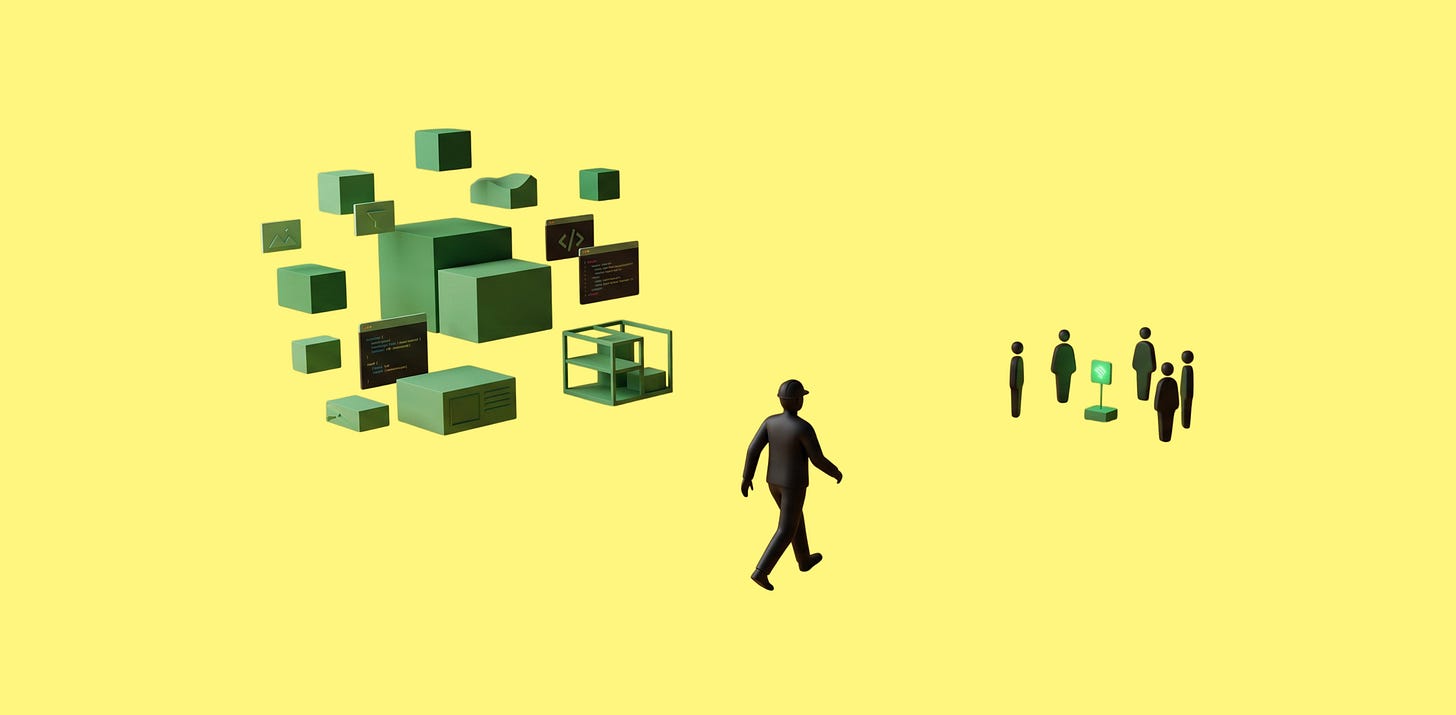
Last week we talked about the hiding problem. Building with AI feels productive. So does avoiding the hard stuff. The terminal won't reject you. The market will.
This week: the exercise that matters more than everything else.
We Got Into Y Combinator
We have news.
Mike and I got into Y Combinator's Summer 2026 batch. We're in San Francisco with 250+ startups from around the world.
Airbnb started here. Stripe started here. Dropbox. Replit. Hundreds of companies that provide real value to businesses and consumers everywhere.
We're grateful for the opportunity.
But that's not what this newsletter is about.
It's about what we were reminded of the moment we walked in.
The Only Thing That Matters
YC has been watching startups for 15 years. They've seen thousands launch. They've seen what works. They've seen what fails.
And the thing they keep coming back to is the simplest thing:
Build something people want.
Not build something cool. Not build something technically impressive. Not build something with AI because AI is hot.
Build something people want.
It sounds obvious. It's the hardest thing to do.
More Solutions Than Problems
Here's the 2026 problem:
AI made building easy. Anyone can ship. A weekend is enough to have something live.
So everyone's building.
But what are they building? Solutions. Lots of them. Everywhere you look.
AI wrappers. Agent frameworks. Productivity tools. Workflow automations. Another way to do the thing you're already doing.
More solutions than problems.
The technology is moving faster than anyone can track. What it can do. How it can impact people. What people are trying. What people actually want.
It's messy. And in the mess, most people skip the hardest part.
The Validation Problem
Validation is the hardest exercise in the world.
Not because it's complicated. Because it's uncomfortable.
Building is comfortable. You're in control. The code does what you tell it. The agent responds. The system works or it doesn't. Clear feedback. Safe environment.
Validation is not comfortable. You're talking to people. Asking questions. Hearing things you don't want to hear. Finding out the problem you thought was urgent isn't. Finding out the market you thought was big isn't.
So people skip it. Or they fake it.
"Two people said they have this problem." That's not validation.
"I saw a Reddit thread about it." That's not validation.
"It makes sense that people would want this." That's definitely not validation.
What Real Validation Is
Real validation is a deeper exercise.
You understand every part of the user journey. Where they start. What they try. Where they get stuck. What they do next. How they feel at each step.
You understand pain points so well that you can predict urgency. Not "this is annoying." That doesn't get people to pay. But "how to get more of this done urgently" or "this is blocking me from the thing I care about most."
You understand the scale. Not "some people have this problem." But "how many people, in what context, with what frequency, with what willingness to pay."
This exercise is brutal. It takes time. It requires conversations. Real ones. Dozens of them. Maybe hundreds.
Most people don't do it. They build instead. Building feels like progress. The hiding problem again.
The 2026 Trap
The trap in 2026 is this:
Building is so easy that it feels like the work.
You can ship a prototype in a day. You can have an agent running by end of week. You can have a landing page, a waitlist, a ProductHunt launch, all in a weekend.
And none of it tells you if people want it.
The launch economy. One million launches. Ten thousand winners. What separates them?
Not the build. The validation before the build. The understanding of what people actually want.
The Exercise
Here's what real validation looks like:
Talk to people. Not surveys. Not forms. Conversations. Ask about their life, their work, their problems. Don't pitch. Listen.
Find the urgency. Not "would this be nice to have." But "what are you doing about this today?" and "how much is this costing you?" and "what have you already tried?"
Map the journey. Where do they start? What do they try first? Where do they get stuck? What do they do when they're stuck? How do they feel about it?
Predict behavior. If you showed them a solution, would they use it? Would they pay? How much? How fast? Be honest with yourself.
Find the scale. How many people have this problem at this urgency level? Is it a market or a niche? Is it a business or a feature?
This is the exercise. It's not glamorous. It doesn't feel like shipping. But it's the only way to know if you're building something people want.
Why This Matters Now
Stop selling AI. Sell the outcome. But you can only sell the outcome if the outcome matters.
Trust is the new moat. But trust comes from solving real problems. Not imaginary ones.
AI alone is fragile. Systems make it reliable. But the best system in the world doesn't matter if nobody needs what it produces.
Everyone gets the same model now. The upgrade won't save you. What separates builders is not the tools. It's knowing what to build.
The entire arc we've been building leads here. Build the systems. Do the coordination. Stop hiding.
And make sure you're building something people actually want.
The Close
AI made building easy.
So easy that it's tempting to skip the hard part.
But the hard part didn't go away. It just got more obvious.
Validation. Understanding what people want. Predicting urgency. Finding scale.
This is the hardest exercise in 2026. Maybe the hardest exercise ever.
YC has watched this for 15 years. The companies that win are the ones that do this exercise honestly.
Build something people want.
Simple to say. Brutal to do.
We're in the room now. We're doing the exercise. We'll share what we learn.
Vol 1: The opportunity exists. Economics changed.
Vol 2: Smart operators doing dumb work. Patterns to spot.
...
Vol 21: The hiding problem. Building with AI feels productive. So does avoiding the hard stuff.
Vol 22: Build something people want. The hardest exercise in 2026.
We're in the room now. We're doing the exercise.
Mike & Govind
We got into YC S26. The first thing they reminded us: build something people want. This week, stop building. Talk to five people. Real conversations. Find out if the problem is real, urgent, and worth paying to solve. That's the exercise.