Engineers Got AI That Works
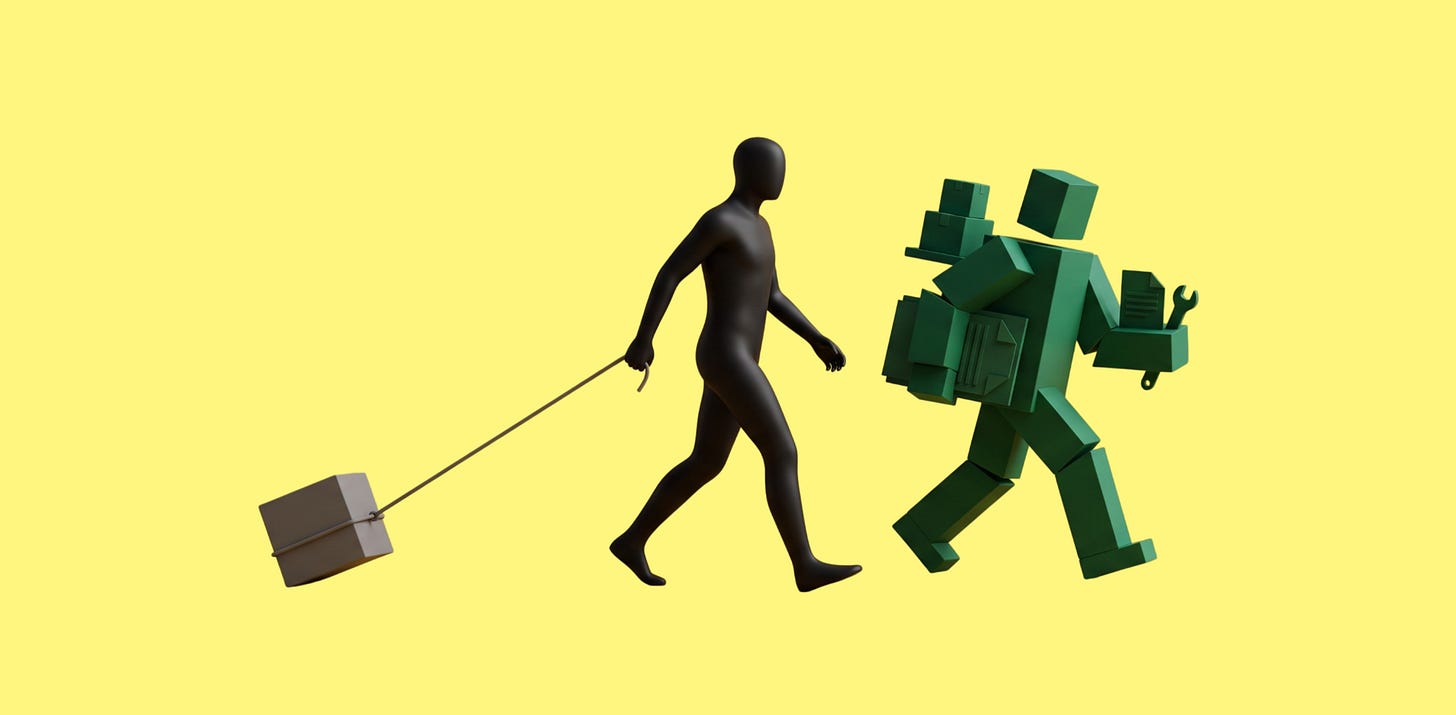
Everyone else got a chat box. Same model, wildly different outcomes. The gap isn't intelligence. It's whether the AI sitting in front of you actually acts.
Mike Molinet & Govind Kavaturi
Last week we talked about build something people want. The hardest exercise in 2026. More solutions than problems. Validation is brutal. But it's the only way to know you're building the right thing.
This week: why most people feel like AI isn't working for them.
105 Calls
We spent the last two weeks on about 105 calls. Founders. Operators. People inside mid-size and enterprise companies.
Six months ago, the assumption was that the companies winning with AI were the ones with the best models.
That's not what the calls showed.
Same Model, Different Outcomes
Almost everyone is paying for the same AI now. And most of them feel like it isn't doing much for them.
Then you look at their engineering teams.
Same company. Same spend. And the engineers are getting two to three times more done than they were a year ago.
Everyone else is roughly where they started.
One group leapt. The rest are stuck. Despite using the same model.
The Easy Explanations Don't Hold
It isn't that engineers are smarter or more "AI-forward."
It isn't that the technology works for code and falls apart everywhere else.
The intelligence is the same intelligence.
What differs is the kind of AI each group was handed.
Engineers Got AI That Works
Tools like Claude Code and Codex have been refined for the developer workflow.
They take a goal. Break it into steps. Use other software. Check their own output. Keep going until the thing is done and validated.
The person points. The AI does the labor.
That is a real change in who does the work.
Everyone Else Got A Chat Box
You type a question. You get an answer. The whole job of turning that answer into something useful stays with you.
The AI wrote a paragraph. Or refined an email. Or wrote a first pass at the blog post.
You still had to prompt it. Hand it context. Put it somewhere. Send it. Track the reply. Remember where you left off tomorrow.
The AI helped for a few minutes. You did the other six hours.
The Chat Box Trap
A chat box is reactive. It does nothing until you show up and prompt it. And it hands every output right back to you.
So the harder you push it toward real work, the more you become its operator. Feeding it context. Stitching its answers together. Walking it through every step by hand.
You become the bottleneck. Not because you're slow. Because the tool requires you in every loop.
Co-piloting doesn't scale. The chat box keeps you in permanent co-pilot mode.
One marketing lead we talked to could name the exact five roles she would hand to AI if she could. She had no way to make them real. So she was back to pasting prompts into a chat tab between meetings.
That is the pattern almost everywhere.
People didn't fail at AI. They were handed a tool that makes them do all the assembly themselves.
The Coworker Illusion
Some of you are pushing back: "I have Cowork. Isn't that a coworker?"
It can be.
But we asked a dozen people who'd tried it to show their actual setup. Almost all were doing the same thing: opening a task and chatting.
No projects. No automated routines running in the background. Files never connected.
Only a few folks had something set up that provided recurring output. And most of them had someone else help set it up.
The tool can genuinely act like a teammate. But almost nobody has it configured that way. Because getting there takes exactly the kind of setup the rest of us don't have the time or instinct for.
So it quietly becomes another chat box with a nicer logo.
The Wrong Upgrade
The upgrade most people are waiting for is the wrong one.
They keep holding out for a smarter model. The next release that will finally make this click.
But engineers pulled ahead for one concrete reason: their AI could act on its own.
Same model as everyone else. With something around it that let it carry out the work instead of just describing it.
The upgrade won't save you. Everyone gets the same model. The difference is what's built around it.
Tool vs Colleague
What the other ninety percent are missing is already sitting in front of them. It's the same model the engineers use.
The missing piece is whatever turns it from a tool you operate into something closer to a colleague.
Three things separate the two:
Proactive. A colleague doesn't wait for you to hand over every task. It sees what's happening and moves.
Persistent. A colleague carries your context forward. Monday morning doesn't start with re-explaining everything. Memory is the past. State is the present. A colleague has both.
Does the work. A colleague takes something off your plate and brings it back finished. Not a draft and a list of next steps for you to do.
This is human-agent collaboration in the plainest sense. A person and an AI sharing context and passing work back and forth the way two coworkers would.
Engineers have had a rough version of it for a year. For everyone else it's only now starting to show up.
The Real Race
This is the real race. And most people are watching the wrong scoreboard.
Every large company has access to roughly the same intelligence today. "Best model" quietly stopped being the game.
The game is: who gives the rest of the world, the people buried in work who never learned to drive a chat box the way an engineer does, an AI that works like a coworker.
Whoever does that will do for the other ninety percent what the coding tools already did for engineering.
The Close
The reason AI still doesn't feel like much for most of us comes down to one thing:
We were handed a tool that waits.
The moment your AI stops waiting, the whole thing changes.
Engineers got AI that works. Everyone else got a chat box.
The model isn't the gap. The setup is.
Vol 1: The opportunity exists. Economics changed.
Vol 2: Smart operators doing dumb work. Patterns to spot.
...
Vol 22: Build something people want. The hardest exercise in 2026.
Vol 23: Engineers got AI that works. Everyone else got a chat box.
The model isn't the gap. The setup is.
Mike & Govind
This week: Look at your AI setup. Are you operating a chat box or working with a colleague? If you're still prompting, pasting, and assembling every output yourself, the tool isn't broken. It's just waiting. Make it stop waiting.